




Ingredients:
-
320 g Arborio rice
-
1 duck breast (about 200 g)
-
2 tablespoons hoisin sauce
-
1 tablespoon soy sauce
-
1 teaspoon honey
-
1 fresh spring onion, finely chopped
-
1 garlic clove, finely chopped
-
1 liter vegetable broth
-
1 glass of white wine
-
Olive oil to taste
-
Salt and pepper to taste
-
Fresh ginger (a piece about 2 cm)
Method:
Start by scoring the skin of the duck breast with a sharp knife in a crosshatch pattern (avoid cutting into the meat). This helps the fat render during cooking and makes the skin crispy. Heat a non-stick pan without oil and place the duck breast skin-side down. Cook over medium heat for 7–10 minutes, allowing the fat to melt slowly and the skin to become golden and crispy. Avoid moving the duck too much. Once the skin is crispy, flip the duck breast and cook for another 3–5 minutes, depending on your preferred doneness (ideally pink inside). Remove the duck from the pan and let it rest on a cutting board for a few minutes to retain its juices.
In a bowl, mix 2 tablespoons of hoisin sauce, 1 tablespoon of soy sauce, and 1 teaspoon of honey. This gives the duck the sweet–savory flavor typical of Chinese cuisine. Brush the cooked duck breast with this sauce, coating it evenly on all sides. Slice the duck thinly and set aside to garnish the risotto later.
In a large pan or pot, heat a drizzle of olive oil over medium heat. Add the chopped spring onion, chopped garlic, and grated or finely chopped fresh ginger. Sauté for 2–3 minutes, stirring often, until the spring onion softens and the garlic and ginger release their aroma. Be careful not to burn the garlic, or it will become bitter.
Add the 320 g of Arborio rice to the pan with the sauté. Stir continuously for 2–3 minutes, until the rice becomes translucent around the edges. This step is essential for a creamy risotto, as it toasts the grains and helps seal in the starch.
Pour in the glass of white wine and stir until the alcohol evaporates and the liquid is almost completely absorbed. The wine adds acidity that balances the rich flavors of the duck and hoisin sauce.
Begin adding the hot vegetable broth (about 1 liter), one ladle at a time. Wait for the rice to absorb almost all the liquid before adding the next ladle, stirring frequently to help release the starch and create a creamy texture. Continue cooking over medium-low heat for about 18–20 minutes, until the rice is al dente and most of the broth is absorbed. Halfway through (after about 10 minutes), add some of the sliced duck prepared earlier. Stir gently to infuse the risotto with the flavor of the duck and hoisin sauce. Continue cooking until the risotto is creamy and well combined.
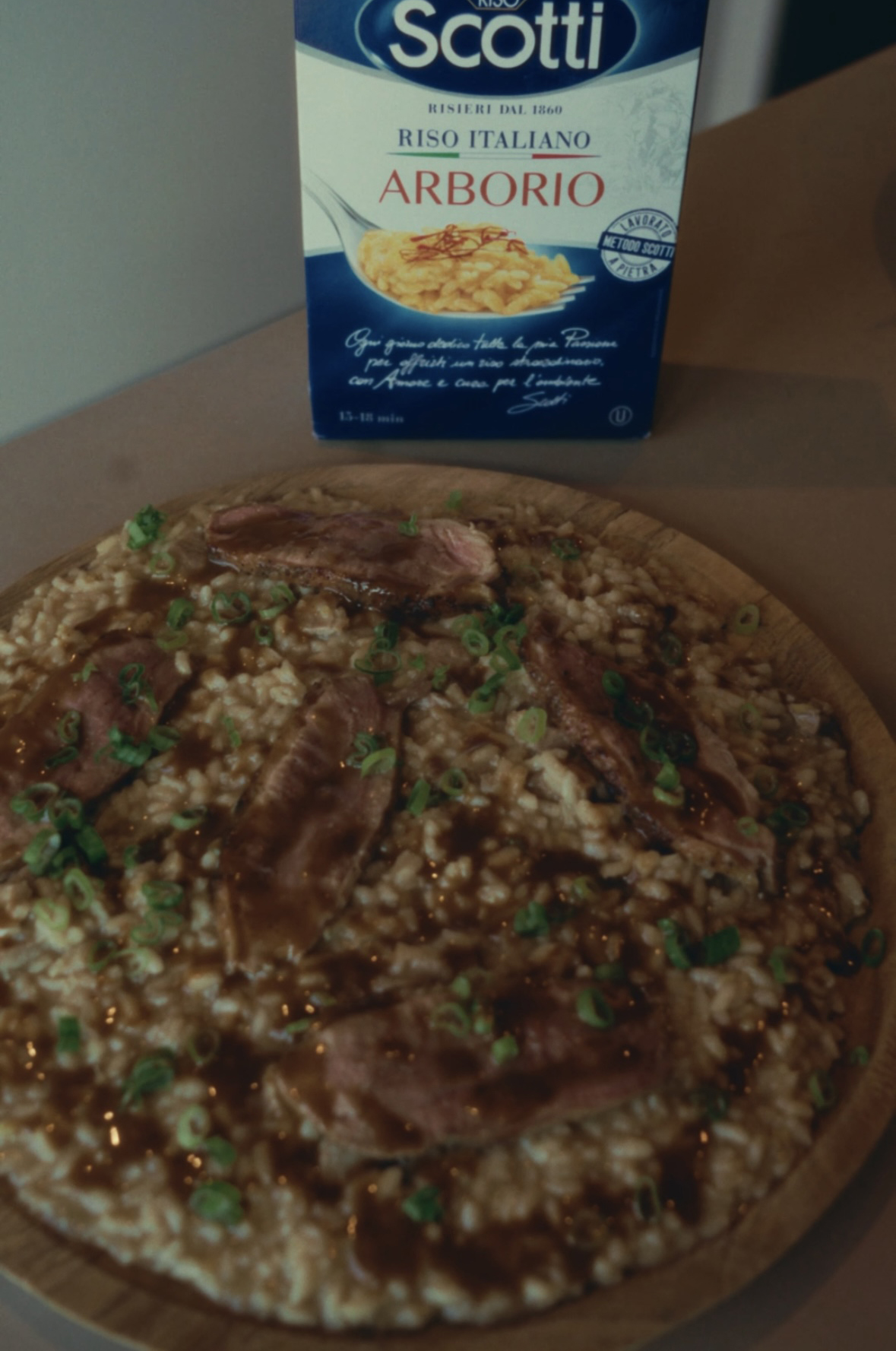
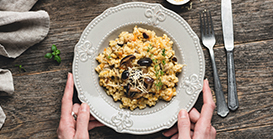
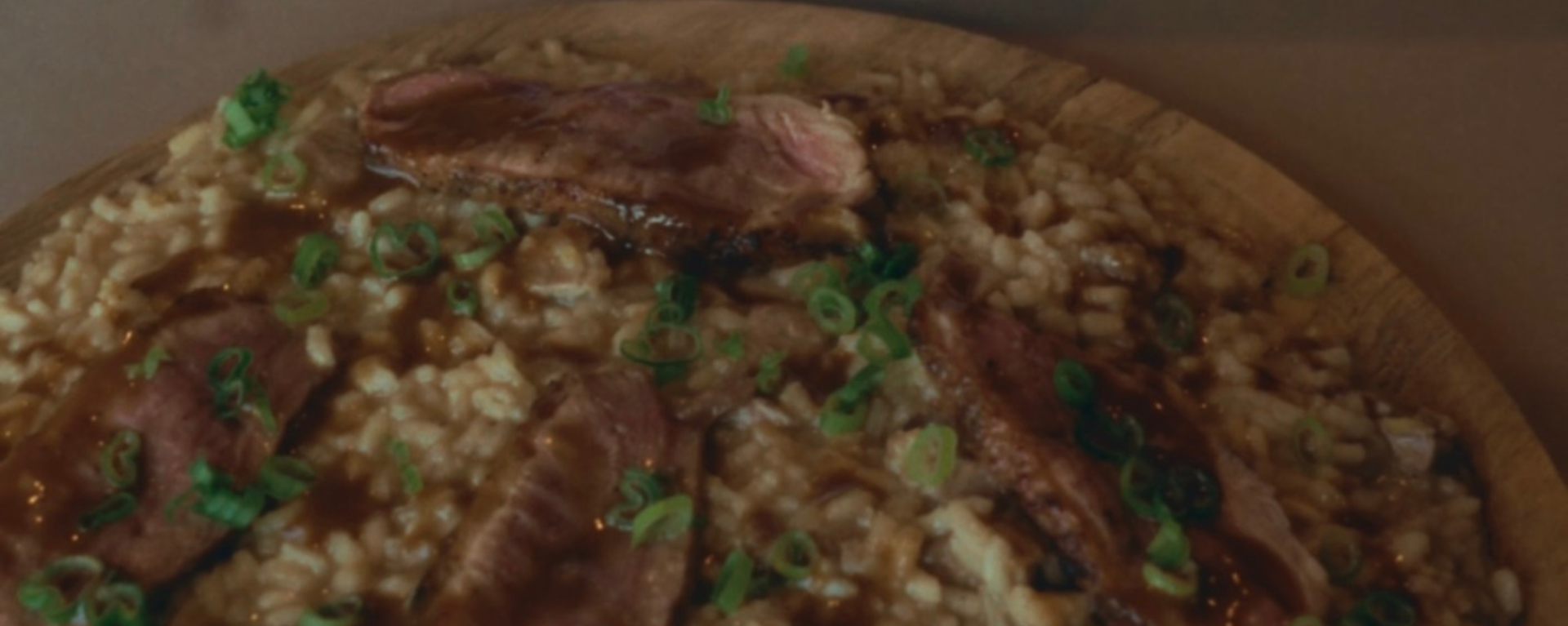
When the risotto reaches the desired consistency (creamy but not too liquid), adjust with salt and pepper. Remove from the heat. Serve the risotto on individual plates and garnish with the remaining glazed duck slices. Finish with some freshly chopped spring onion for color and freshness.